Transmitter presents:

BAD CARE

Anna Ting Möller

May 2–May 31, 2026
Opening Reception: Saturday, May 2, 6-8 PM

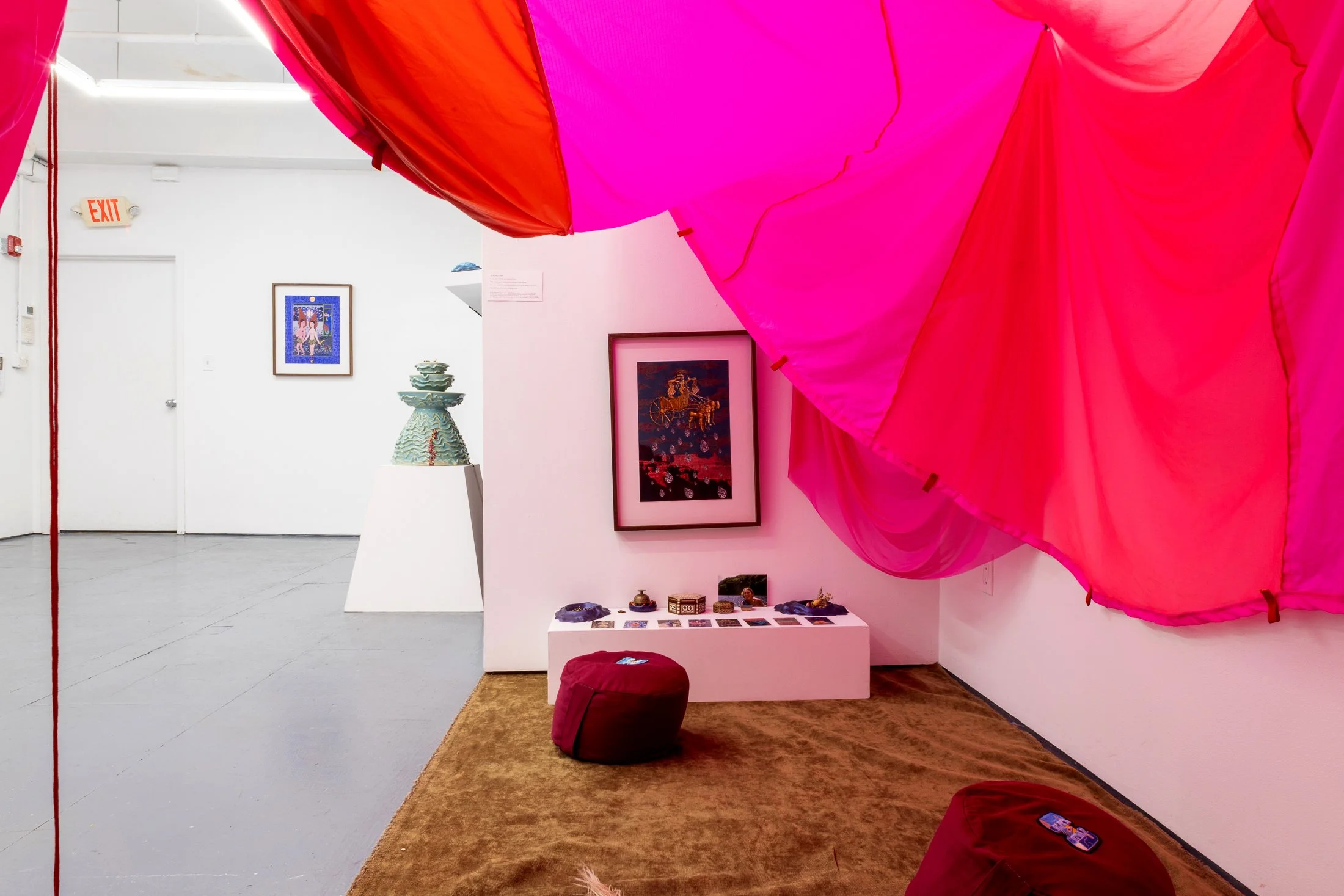
Transmitter is pleased to present BAD CARE, a site-specific presentation of works across sculpture, installation, and video by Anna Ting Möller. The title BAD CARE references the Swedish word for bathtub, badkar. The word itself stems from the Old English bæð, "an immersing of the body in water, mud, etc.” and the Proto-Indo-European bhē-, meaning "to warm," plus the Germanic suffix -thuz, indicating “act, process, or condition,” as in birth and death. This etymology implies that the original intent of the bath was the warmth of the water itself, rather than just the act of immersion, and its transformative potential. Within the context of the exhibition, this ubiquitous receptacle for washing, purifying, maintaining, and warming the body becomes a site for contemplating caregiving structures, biopolitical categories, reproductive logics, and the continual labor of suturing the self. 

   Photo Courtesy the Artist

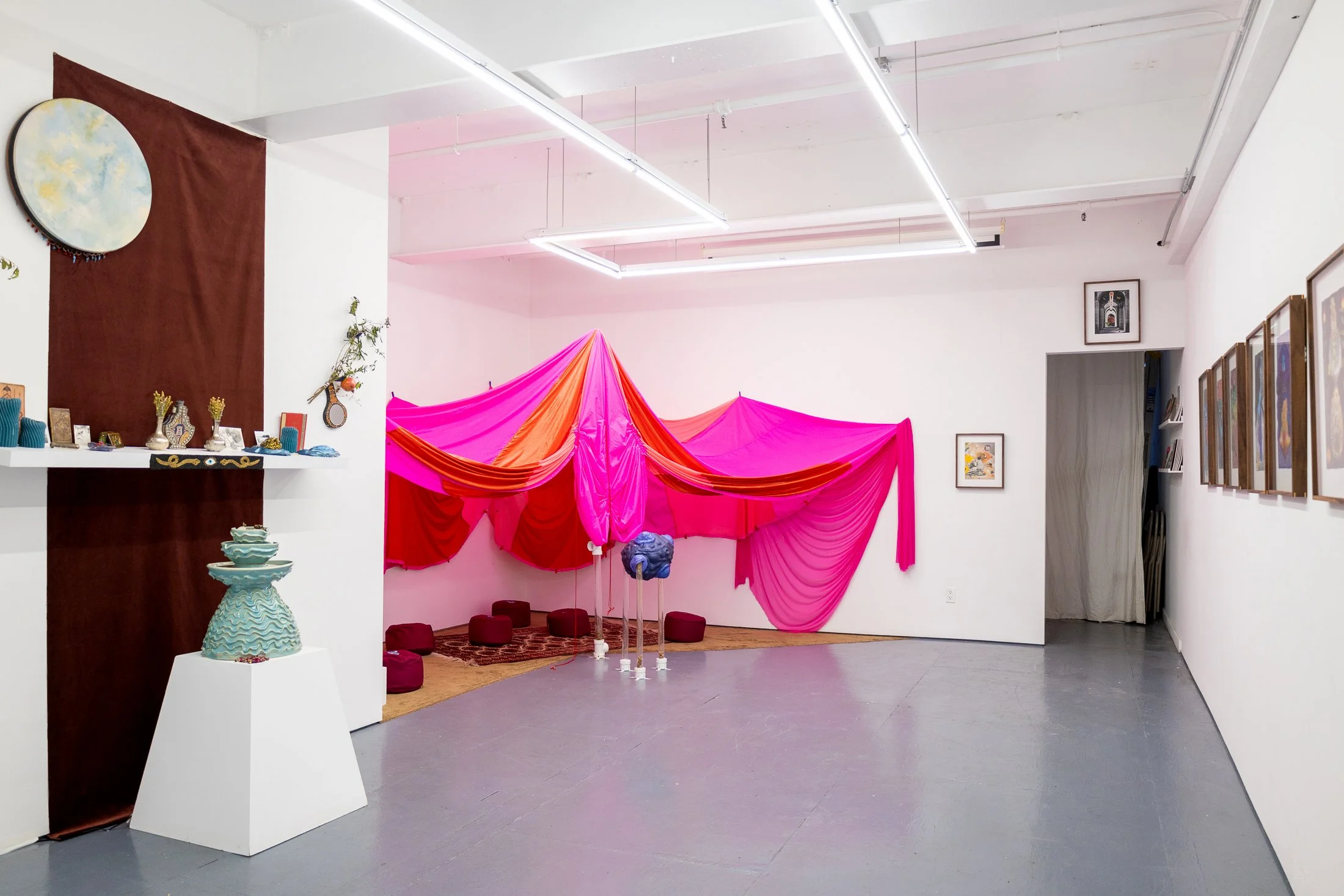
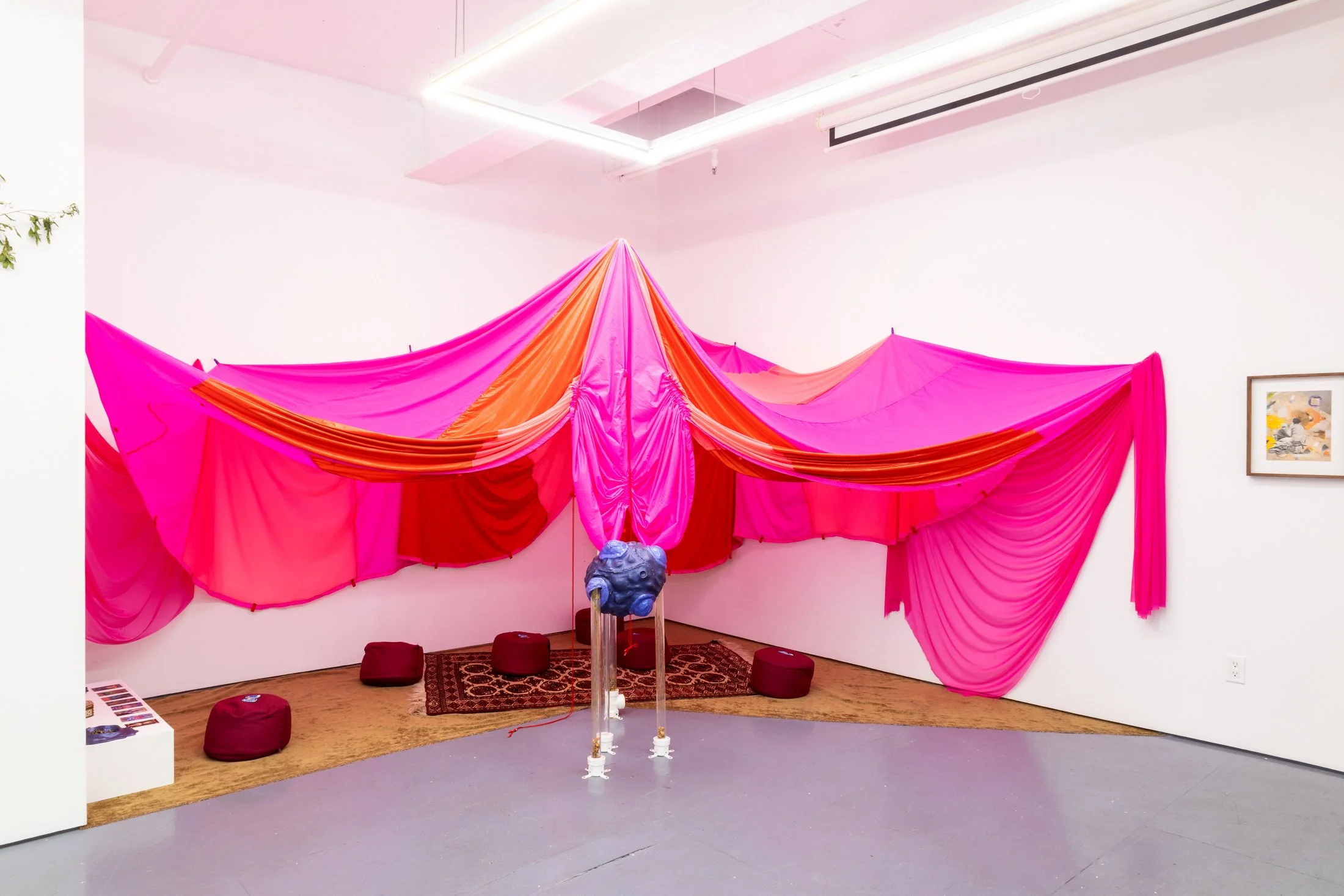
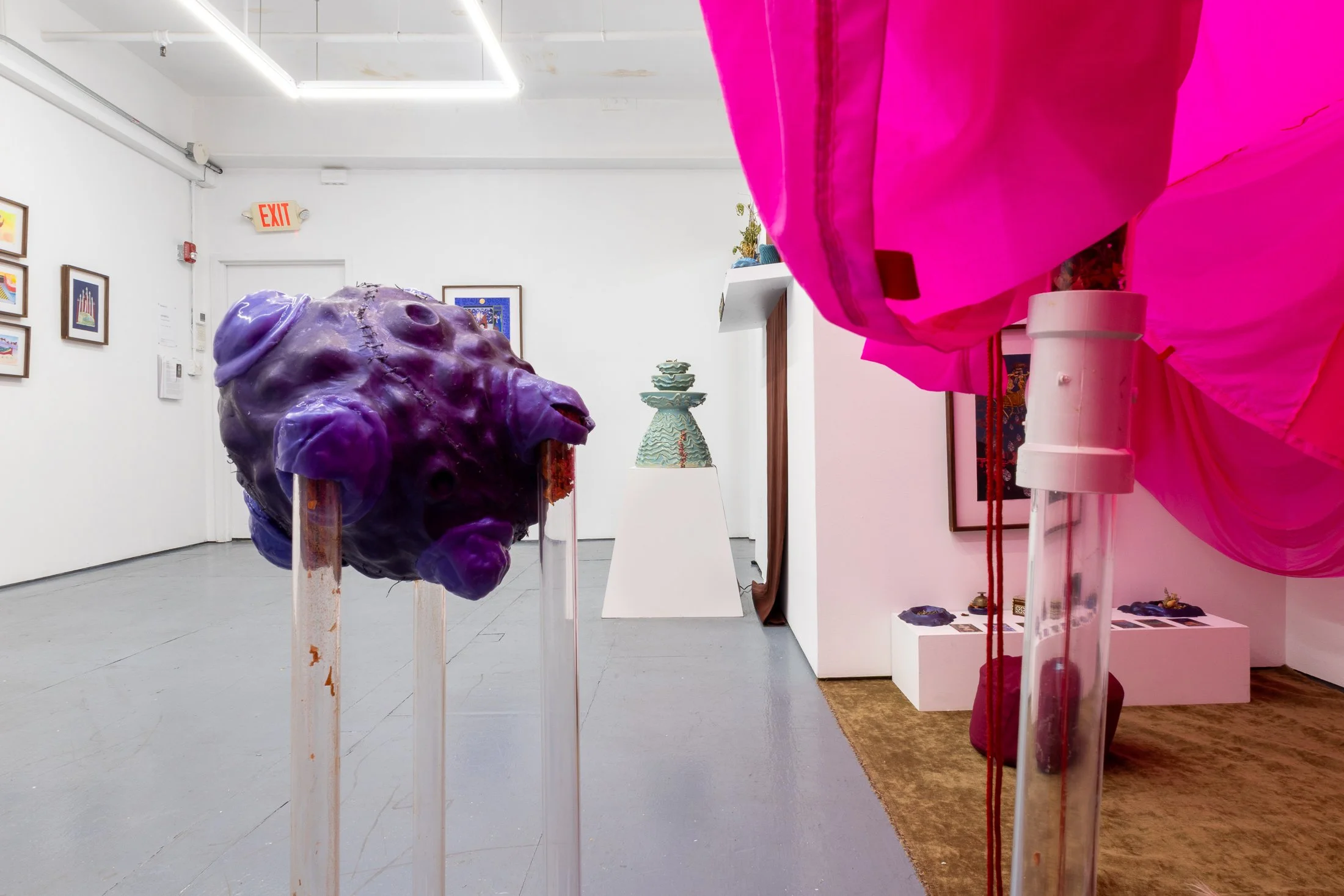
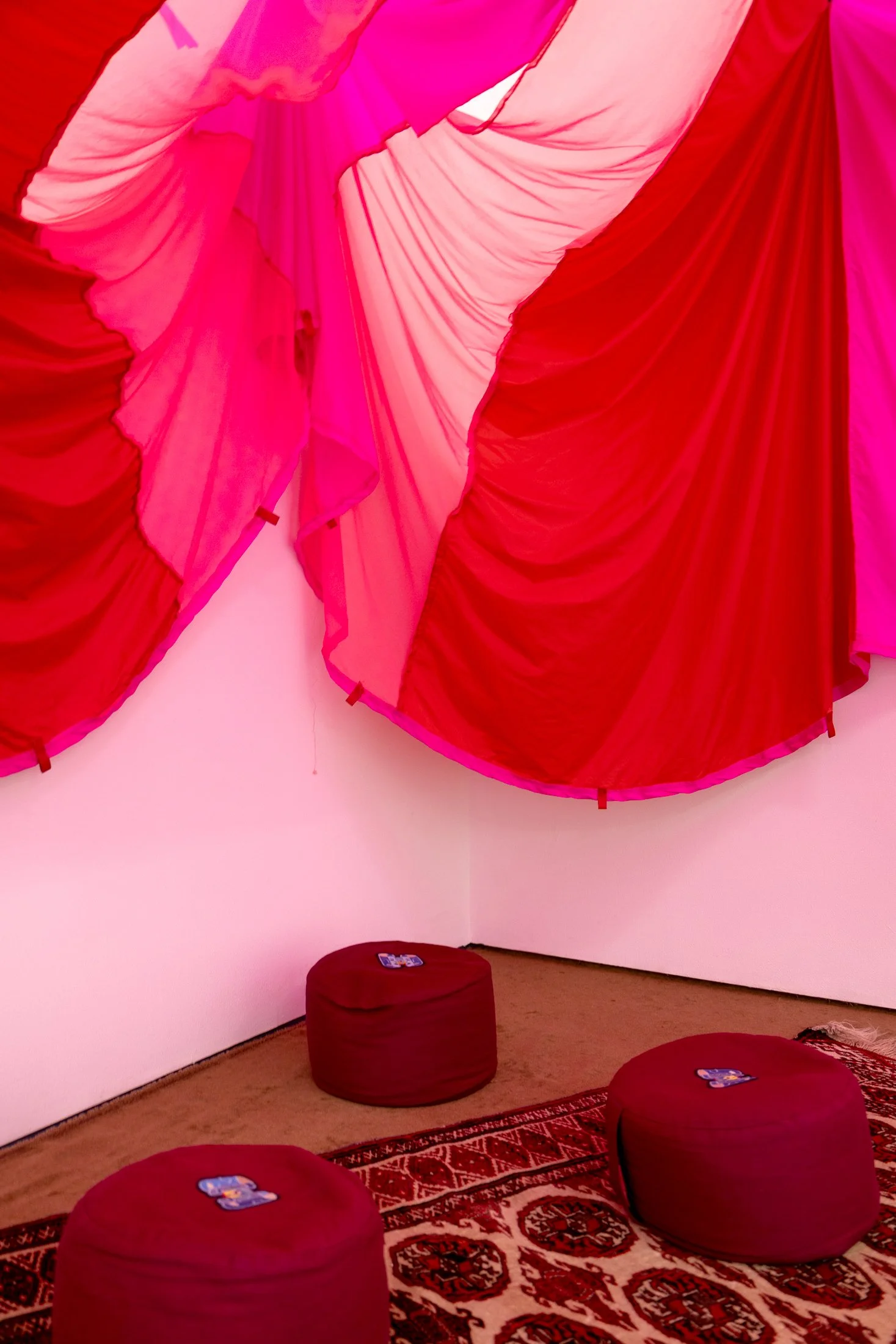
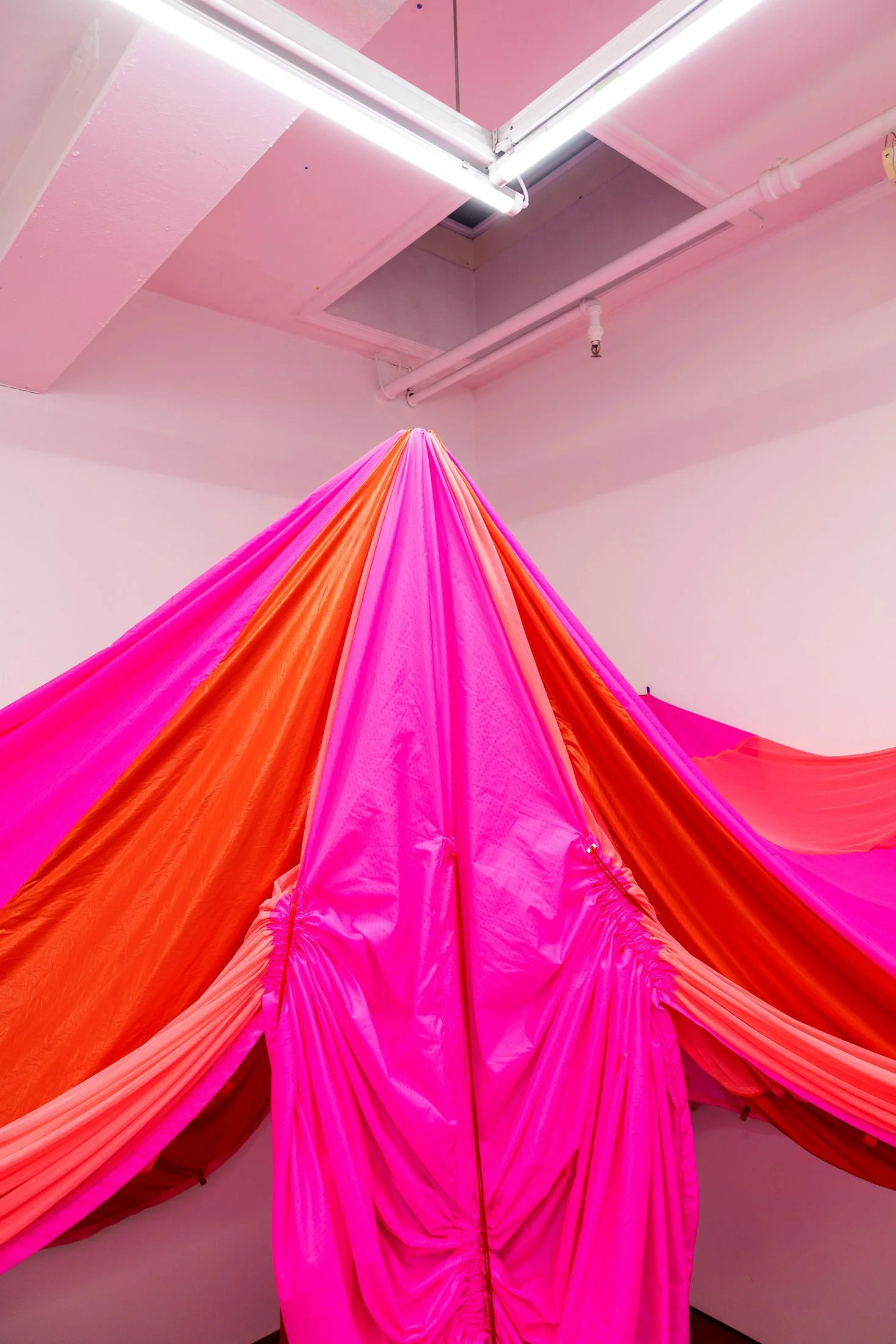
The multimedia exhibition envelops the viewer in transparent shower curtains, themselves a filmic or dermic layer functioning to contain and control moisture, maintaining cleanliness within domestic life. The sculptural work In Tandem (2025) hangs in the center of the gallery as a fleshy plié of abstracted limbs. The two arcing forms, suspended closely but not connected, are covered with a skin of grafted SCOBY (Symbiotic Cultures of Bacteria and Yeast), a biofilm and living culture that ferments kombucha. It consumes sugar and tea, producing acetic acid, ethanol, and carbon dioxide—among other metabolic substances also found within the human body—through its digestion. On a 2015 trip to China, Möller was gifted the kombucha culture which they continually maintain, harvest from, and co-create with to this day. Itself often referred to as a “mother,” the SCOBY is asexually regenerative, continuously creating new “baby” cellulose layers to protect the brew. With each layer marking the passage of time, the mother culture becomes a feral, living archive—fungi representing their own kingdom between plant and animal, enacting continuous cycles of environmental regeneration and decomposition, remediation and renewal, closely interfacing between life and death.

Suspended within a misting system that keeps the skin continually alive and moist, In Tandem posits fermentation as a messy, unpredictable natural process existing outside capitalist time and production, as well as outside reproduction within the heteronormative nuclear family structure. Demonstrating a non-human kinship and relationality, Möller’s sculptural practice uses fungal-bacterial colonies as a metaphor that complicates the idea of “origin culture.” The material itself, in its visceral, corporeal wetness between skin and substance, evokes the abject and the inscription of race onto the skin, as the theorist Julia Kristeva describes: “It is thus not lack of cleanliness or health that causes abjection but what disturbs identity, system, order.” Operating through experimental engagement with living biomaterials, Möller commits to continuous cleaning, feeding, and caretaking of the kombucha culture, inverting traditional power dynamics between mother and child. Here, materialism and maternalism become enfolded, destabilizing the idea of a singular biological mother by offering instead a communal one—able to be shared, split, and passed on—reflecting alternative practices of co-parenting, cultivation, and care. 

The three-channel video installation SUN (untitled) (2026) is projected across two walls and a single monitor, taking the form of a visual essay composed in humid summertime China. Chronicling Möller’s travels within China from 2016 to 2018, the video explores topographies of kinship and the passage of time across shifting internal and external landscapes. Möller explores their own vulnerability, desires, and dreams in a first-person, embodied script. Interchanging between English, Swedish, and Chinese, the work demonstrates the mutability of a multivocal identity, layering language as symbolic of the frenetic nature of diasporic selfhood. Moving through varied terrains, the viewer encounters a series of frustrations in the pursuit of self-actualization and connection: discomfort, miscommunication, encounters lost in floods. Möller’s desires become integrated into a larger human fabric. In this way, the video subverts the chronology of traditional storytelling and resolution, while resisting the primacy of biological lineage. A new form of kin-making—and intimacy with the larger world—emerges. Having returned to the origin point, as natural laws might dictate, one can be washed away, making space to be born again unto the self.

Through the solo exhibition BAD CARE, Möller posits care as an ambivalent condition with extractive potentiality. As much as care is assumed a moral good, nurturing also produces dependency and is easily weaponized in contemporary life. Its absence or lack can hold dire intergenerational repercussions. Across media, process, and temporalities, the exhibition situates the viewer within an indeterminate encounter with longing, desire, displacement, home, inheritance, latent life, and animacy. Shown together for the first time, SUN(untitled) provides the narrative context and backdrop for the production and genesis of In Tandem, the two functioning in a call-and-response within the artist’s larger world-building framework. BAD CARE becomes an ambient container for holding meaning, considering our complex relationships to various forms of care, and extending them beyond the traditional bounds of the sensuous body as we know it.

In Progress, 2024, Performance, Length: 12 min, Material: Kombucha, silk lining, water, body, hosiery, shampoo, green food colour. Photo: Elisheva Gavra 

ARTIST BIO

Anna Ting Möller explores the intersections of materiality, transformation, and bodily processes by working in symbiosis with a kombucha mother to create ephemeral sculpture/installation/performance that challenge conventional notions of life, death, lineage and care. Focusing on themes such as the sexualized and grotesque, Möller’s art critiques societal constructs, particularly the fetishization of the Other. Möller’s work has been exhibited at MASS MoCA, Liljevalchs Konsthall; ArkDes; ICPNA; Jyväskylä Art Museum; and Urban Glass, among others. https://www.annatingmoller.com/about